
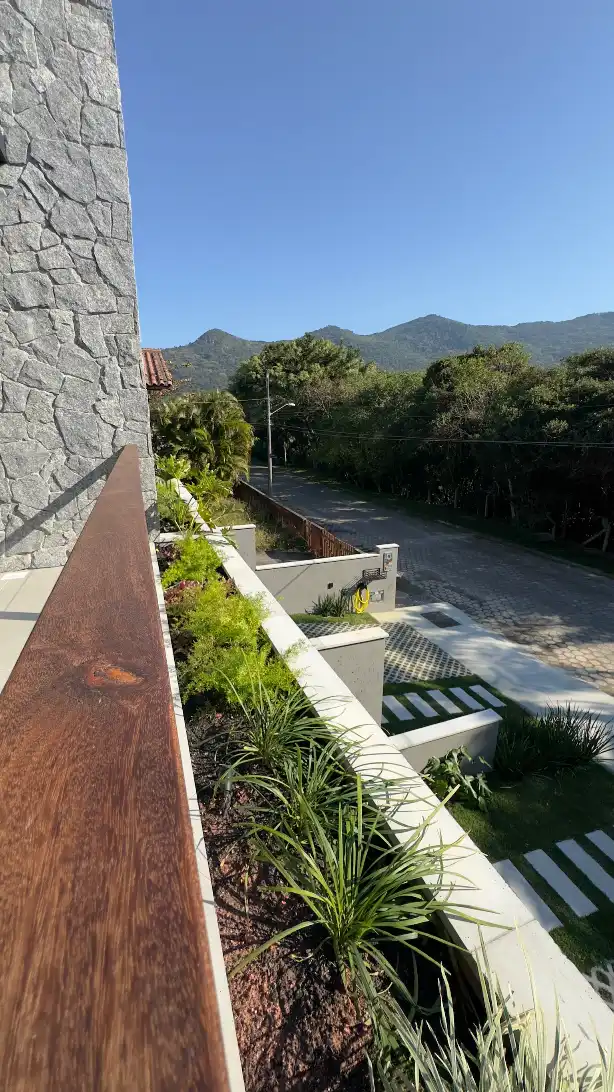
The South of Florianópolis is the part of the island where the property market stops behaving like a city and starts behaving like a string of villages. Between Campeche and the island’s southern tip, listings arrive one house at a time — a renovated fisherman’s cottage here, an architect-designed home there, a sloping parcel of land with a view and a complicated planning story. This guide covers what that thin market actually contains, how prices work when there is no tower-block benchmark next door, and which checks separate a good southern purchase from an expensive lesson.
What does the southern sale market actually consist of?
Three product types dominate. First, established village houses in Ribeirão da Ilha, Armação, Pântano do Sul and Açores — often older structures on well-located lots, sold as much for the land as for the building. Second, a small but growing layer of contemporary homes built in the last decade for owners who chose the South deliberately; these are the houses that reach international buyers most often. Third, land: parcels inside and at the edge of the villages, where the value depends almost entirely on what may legally be built.
What the South barely offers is the standard product of the rest of the city — new condominium apartments. The municipality’s Pântano do Sul district plan describes a district of hills, dunes, lagoon and coast where cultural and environmental identity constrain urbanisation, and the official neighborhood estimates put southern densities at a small fraction of Campeche or Centro. Scarce supply is not a market failure here; it is the planning regime working as intended.
Which villages should be on a house hunter’s map?
Each southern settlement sells a different daily life. Ribeirão da Ilha is the heritage axis along the calm western shore — oyster restaurants, colonial architecture, sunsets over the bay, and houses that trade on charm and frontage. Armação faces the open Atlantic with a working beach, a river lagoon behind it and the trailhead to Lagoinha do Leste. Pântano do Sul keeps a genuine fishing-village core with a protected bay. Açores, beside it, is the quiet residential grid where most of the area’s newer family homes have been built. Campeche, at the South’s northern edge, is the transition zone: more urban, more services, more supply, higher turnover.
A useful exercise is to spend a weekday morning and a Sunday afternoon in each candidate village before shortlisting a single house. The distances are small; the differences in rhythm are not. Our South of the island guide covers the landscape and access trade-offs, and the Pântano do Sul & Açores guide goes deeper on the two villages where international interest concentrates.
How do prices work where there is no benchmark next door?
The citywide asking-price index is nearly useless for a southern house — by design. The FipeZAP methodology follows advertised ready apartments in monitored cities, a sample that a village house on 400 m² of land simply is not part of. Two houses a street apart can differ legitimately by half a million reais because one has clean title, municipal water and a buildable rear lot while the other has an unresolved inventory, a spring crossing the land and a permit history nobody can produce.
So price a southern house the way a surveyor would, not the way a portal does: land value for that specific village and street, plus replacement cost of the building adjusted for condition, checked against the handful of genuinely comparable recent sales your broker or notary can document. Where a seller’s number sits far above that reconstruction, the gap is the negotiation, not the market. The property prices guide explains how to use the citywide data for context without letting it price a specific home.
What makes land in the South a different purchase from a house?
Land looks like the bargain route into the South and is where buyers most often get hurt. A parcel’s real value is set by its legal buildability: municipal zoning and microzone parameters, environmental overlays covering restinga, dunes, slopes and watercourses, and the practical availability of access, water and sewage. None of this is visible from the photographs, and all of it is checkable before an offer through the city’s GeoPortal planning tools.
Treat any southern land purchase as a two-professional decision: a lawyer for title and an architect or engineer for buildability, both engaged before money moves. If the plan is to build, read our building a house guide first — permits, FLORAM environmental authorisations and responsibility records add months and real cost to the naive timeline, and a parcel that cannot clear them is not cheap at any price.
How should you verify a southern house before offering?
The verification sequence is the same as anywhere in Brazil — matrícula, debts, deed, registration, as laid out in the buying process guide — but the South adds emphasis in three places. Confirm that what stands on the lot matches what is registered and permitted, because informal extensions are common in older village stock and become the buyer’s problem at resale. Confirm the water and sewage arrangement house by house; parts of the South predate full network coverage. And confirm access rights where a lane or shared path crosses neighbouring land — customary use is not the same as a registered easement.
None of these checks is exotic, and none should frighten a prepared buyer away. They are simply where southern purchases differ from buying a new apartment with a developer’s paper trail, and they are the reason a local lawyer earns their fee here.
Does a southern house work as a rental or only as a home?
Seasonality is stark. January and February fill every village; winter is quiet in a way that surprises first-time owners. A well-presented southern house can perform strongly as a holiday rental in the high season precisely because hotel supply is thin, but annualised occupancy will not resemble Ingleses or Canasvieiras, and year-round tenant demand is limited to the small local market. Buyers whose spreadsheet depends on twelve months of rental income are usually looking at the wrong end of the island — compare the broader listings landscape before committing to the South for yield reasons.
The honest case for a southern house is different: space, quiet, nature and a village identity that the rest of the island has largely traded away, with scarcity protecting long-term desirability. That case has held for years and is why well-documented houses here sell without discounting.
What to remember about houses for sale in South Florianópolis
- Supply is structurally thin: village houses, a few contemporary homes and land parcels — almost no new apartment stock.
- Each village is its own market; visit Ribeirão da Ilha, Armação, Pântano do Sul and Açores at different hours before shortlisting.
- Ignore citywide per-metre averages; price from land value plus building replacement, checked against documented local sales.
- Land is only worth what may legally be built on it — verify zoning and environmental overlays through the GeoPortal before any offer.
- Expect village-stock quirks: informal extensions, house-by-house sanitation, customary access paths — all checkable, none ignorable.
- Buy the South for space, quiet and scarcity, not for year-round rental yield.
This guide is general market information, not legal, planning or investment advice; verify the current position of any parcel with the municipal authorities and qualified local professionals.