
Beachfront is the most abused word in Florianópolis property marketing. Portals apply it to anything from a mansion with private dune access to an apartment ten minutes’ walk from the sand, and the price difference between those two products is not a rounding error. This guide sorts the island’s coastal offer into what you can genuinely buy, explains the legal layer most foreign buyers have never heard of — the federal marine strip — and sets out how to decide whether the oceanfront premium is worth paying at all.
What counts as beachfront, and what merely sounds like it?
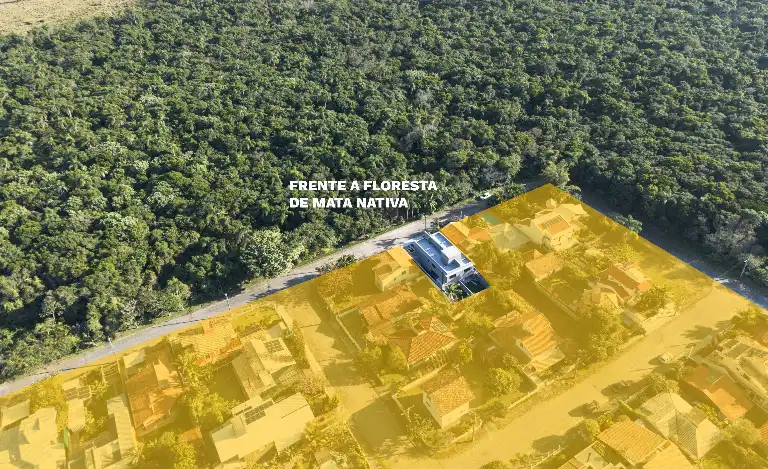
Sort every coastal listing into one of three products before comparing prices. True beachfront (frente mar, pé na areia): the lot itself meets the beach or its dune system, with nothing but public sand between the house and the water. Front row: the property stands on the first built street, with a road or boardwalk between it and the beach — most of the view, a fraction of the exposure. Walking distance: everything honestly described by minutes rather than metres.
The distinction is not pedantry; each product has its own scarcity, its own risk profile and its own buyer pool at resale. When a listing says “meters from the beach”, make the seller state the number and walk it yourself — and treat “sea view” claims the way our listings field guide recommends: as assertions to verify from inside the actual rooms.
Where does genuine beachfront exist on the island?
Less of the coastline is available than the map suggests. Long stretches are dune fields, restinga, rocky headlands or protected areas where nothing can be built; others are already occupied by consolidated neighbourhoods. Genuine first-line supply concentrates in a few places: Jurerê Internacional and Jurerê in the north, where the planned beachfront strip is the island’s most expensive address; parts of Canasvieiras, Ingleses and Praia Brava, where front-line apartments dominate; Lagoa da Conceição and Barra da Lagoa for lagoon-front rather than ocean-front living; and scattered village frontage in the South at Armação and Pântano do Sul, where first-line houses trade rarely and quietly.
Citywide, the FipeZAP June 2026 report already places Florianópolis among Brazil’s most expensive markets per advertised square metre; true frontage sits at the top of that distribution. Scarcity, not construction cost, is what you are paying for.
What is the federal marine strip, and why does it matter to your title?
Brazil’s shoreline carries a legal layer that surprises almost every international buyer: the terrenos de marinha, a federal strip measured from the historic tidal line. Land inside it belongs to the Union; private parties hold it through occupation or aforamento (emphyteusis) arrangements that involve annual federal fees (foro or occupation tax) and a percentage charge (laudêmio) on onerous transfers. Many first-line properties across the island stand wholly or partly on this strip; plenty of second-line ones do too.
None of this makes a purchase impossible — thousands of enrolled properties change hands routinely — but it changes what “ownership” means on the first line, adds recurring costs, and introduces a federal formality to every sale. Whether a specific lot is affected, and whether its enrolment and payments are current, is a document question for the matrícula and the seller’s federal records, checked by your lawyer during the purchase process before any commitment. A beachfront price that looks like a bargain sometimes turns out to be pricing this in.
Which planning and environmental rules shape the first line?
The first line is also where municipal and environmental regulation is densest. The Florianópolis master plan framework sets height, use and density parameters that are deliberately restrictive along much of the coast, and overlays protect dunes, restinga vegetation and watercourses. An existing beach house is not evidence that it could be rebuilt at the same size today, let alone extended — some of the island’s first-line stock predates rules it could not satisfy now.
Before offering, run the parcel through the GeoPortal planning tools and price any rebuild or extension ambition against what the current parameters actually allow. For buyers weighing frontage in the quieter South, our southern houses guide covers how village-scale planning interacts with these coastal constraints.
What does the ocean do to a house — and to its running costs?
Owning on the first line is a maintenance commitment as much as a location. Salt-laden wind attacks window frames, fittings, electronics and reinforced concrete; south- and east-facing frontage takes winter storms directly; sand migrates; and erosion is an active management topic on several island beaches. Budget for a materially shorter repainting and replacement cycle than an inland home, favour construction detailed for the marine environment, and inspect any existing first-line building with corrosion specifically in mind.
Water quality belongs in the same due-diligence file: the state environment institute publishes bathing-water monitoring for named points along the island’s beaches, and results vary by location and season. For a property whose entire premise is the beach in front of it, checking that beach’s monitoring history — and the surf and swimming conditions more broadly — is basic homework, not paranoia.
Who should buy beachfront — and who should buy one street back?
Pay for true frontage when the beach is the point: you will use it daily, you want the scarcest asset on the island, you can carry the upkeep without resentment, and your holding period is long enough for scarcity to do its work. Buy front row or walking distance when what you actually want is the view, the morning swim and coastal life — the second product delivers most of that at a lower entry price, lower running costs and fewer legal layers, which is why it suits most international buyers, including those buying from abroad for part-year use.
The island rewards both choices; it punishes only the buyer who pays first-line money without understanding what first-line ownership involves.
What to remember about Florianópolis beachfront property
- “Beachfront” spans three different products — true frontage, front row and walking distance; identify which one a listing really is before comparing prices.
- Beaches are public, and the first strip of land is federal marine land; check enrolment, fees and transfer charges before buying on the first line.
- Genuine frontage concentrates in Jurerê, parts of the northern beaches and rare southern village lots; much of the coast can never be built on.
- Existing beach houses prove nothing about current building rights — verify zoning and environmental overlays through the GeoPortal first.
- Budget honestly for salt, wind, storms and erosion: first-line upkeep cycles are short and non-negotiable.
- Most international buyers are better served one street back — most of the view, fewer of the obligations.
This guide is general market information, not legal, tax or engineering advice; confirm the status of any specific coastal parcel with qualified Brazilian professionals and the competent authorities.